

Ghost Month Guide: Dates, Traditions, Fire Safety, and Respectful Practice

On this page
2026 Update, published September 9, 2026: In 2026, the seventh lunar month begins on August 13, the Hungry Ghost Festival falls on August 27, and the month ends on September 10. The eighth lunar month begins on September 11. Dates can vary by time zone and local calendar practice, so use this guide as a cultural reference and follow the instructions of your temple, community, or family.
Ghost Month can sound mysterious when it is explained only through warnings. In practice, it is a month shaped by remembrance, generosity, community ritual, and care for the living as well as the dead. Families may offer food, burn incense or joss paper, attend temple events, leave offerings for wandering spirits, or choose quieter forms of reflection.
The respectful question is not, “How do I avoid every unseen danger?” It is, “How can I understand this tradition, participate thoughtfully, and leave less smoke, waste, and worry behind?”
This Ghost Month guide explains the dates, the Hungry Ghost Festival, common traditions, regional differences, fire safety, lower-waste alternatives, and simple ways to practice at home. I write for readers who may be new to Chinese folk religion and for families who are trying to carry an old custom into a modern apartment, neighborhood, or workplace.
What Is Ghost Month?
Ghost Month is the seventh month of the traditional Chinese lunar calendar, a period when many communities honor ancestors, make offerings, and remember beings who may not have family offerings of their own.
In Chinese, the month is often called 鬼月, or Gui Yue. The fifteenth day is commonly associated with the Zhongyuan Festival, often translated in English as the Hungry Ghost Festival. In some communities, the entire month is treated as a time for extra care around offerings, travel, ceremonies, and public behavior. In others, the emphasis is placed mainly on one festival day or a local temple program.
There is no single worldwide Ghost Month rulebook. Chinese communities in Singapore, Malaysia, Taiwan, Hong Kong, and overseas Chinatowns may share symbols while using different foods, words, and levels of public ritual. A family tradition in Penang may not look like one in Taipei, and neither needs to be treated as the only authentic version.
Ghost Month and Hungry Ghost Festival: What Is the Difference?
People often use these names as if they mean the same thing. They are related, but they are not identical.
| Term | What it refers to | Common focus |
|---|---|---|
| Ghost Month | The full seventh lunar month | Ongoing offerings, ancestor remembrance, temple events, community etiquette, and seasonal customs |
| Hungry Ghost Festival | Usually the fifteenth day of the seventh lunar month | A concentrated day of offerings, prayers, performances, and remembrance |
| Zhongyuan Festival | A Chinese name connected with the fifteenth day and Taoist ritual context | Honoring ancestors, settling unsettled spirits, and acts of generosity |
These traditions may overlap, but they should not be casually flattened into one universal ceremony. When you describe them to an American friend, it is clearer to say that Ghost Month is the wider season and the Hungry Ghost Festival is a central observance within it.
Ghost Month 2026 Dates
The 2026 lunar calendar places the seventh lunar month from August 13 through September 10, 2026. The key date most English-language readers mean by “Hungry Ghost Festival 2026” is August 27, 2026, the fifteenth day of the seventh lunar month.
| 2026 date | Lunar-calendar point | How communities may use it |
|---|---|---|
| August 13 | Seventh lunar month begins | Month-long offerings, temple events, and household observances may begin |
| August 27 | Fifteenth day, commonly called Hungry Ghost Festival | Larger offerings, prayers, public ceremonies, and community gatherings |
| September 10 | Seventh lunar month ends | Final offerings or closing rituals in some families and temples |
| September 11 | Eighth lunar month begins | The calendar moves beyond the seventh-month observance |
Calendar labels can differ when apps use different time zones or local conventions. For a formal ceremony, check a local temple or an official Chinese lunar calendar. The Hong Kong Observatory 2026 Gregorian-Lunar Calendar is a useful public reference for the date conversion.

Why Do People Make Offerings?
Offerings are a language of relationship. Food, tea, fruit, incense, paper goods, and candles can express respect, gratitude, hospitality, or a wish that the departed are remembered. Some families also make offerings for spirits who have no descendants or regular household altar. This is one reason the month is connected with generosity rather than only fear.
In Taoist and Chinese folk practice, the unseen world is often approached through courtesy and order. You prepare the space, present the offering, say who it is for, and close the ritual properly. The point is not to create panic. The point is to acknowledge that life contains more relationships than the eye can measure.
I tell students that an offering should be sincere, clean, and proportionate. A mountain of food does not automatically carry more respect. Often a small plate prepared with care says more than an extravagant display bought from anxiety.
Common Offerings
Practices vary, but common offerings may include:
- Fresh fruit, rice, tea, or cooked dishes
- Incense or joss sticks
- Joss paper, also called spirit money or ghost money
- Paper clothing, houses, cars, phones, or other symbolic goods
- Lanterns, candles, flowers, or simple written prayers
- Community food tables or temple-sponsored offerings
Food may be offered outdoors, at a temple, or at a household altar depending on the tradition. Some families do not offer meat. Some use packaged snacks because they are practical. Others prepare a full meal. There is room for difference.
Common Ghost Month Practices
Visiting a Temple or Community Event
Temple visits can include incense, prayer, chanting, donation, food offerings, or performances. In parts of Southeast Asia, community groups may organize ceremonies, temporary stages, auctions, and shared meals. These events are not only religious. They are also neighborhood gatherings that preserve language, music, food, and memory.
If you attend as a visitor, dress modestly, ask before taking close-up photos, follow the queue, and do not touch altar objects without permission. A quiet “What is the meaning of this part?” is more respectful than guessing.
Leaving Food for Wandering Spirits
Some households or community groups place food outside for spirits without family offerings. The practice is sometimes described as feeding “wandering” or “hungry” ghosts. In a modern city, local rules may limit where food can be placed. Use a tray or designated table, keep it away from walkways, and remove it after the customary period.
Do not leave food where it can attract pests, block a fire exit, or create a hygiene problem. Respect for spirits does not require neglecting neighbors.
Burning Joss Paper
Burning paper offerings is meaningful in many communities, but it is not practiced everywhere and it can create real smoke and fire risk. Some families choose only a small amount. Some use temple collection points. Some replace paper burning with prayer, flowers, digital messages, donations, or a shared meal.
The choice to burn less is not automatically a rejection of tradition. It can be a way of protecting the people, homes, and public spaces that the tradition is meant to care for.
Ghost Month Opera and Getai
In Singapore and Malaysia, temporary performances such as getai may be staged for both human audiences and unseen guests. Front-row seats may be left open in some settings. The music can be loud, playful, glamorous, and surprising to a visitor who expects a solemn memorial service.
Do not assume every Ghost Month event is a quiet ritual. Public culture is part of the observance, and local organizers will tell you what is appropriate.
Ancestor Remembrance at Home
A family may clean an altar, prepare a favorite food, light incense, share stories, or simply pause to remember someone who has died. If your family does not maintain an altar, you can still mark the month by cooking a remembered dish, looking through photographs, making a donation, or writing a letter that will not be sent.
This kind of practice is especially accessible for Chinese American families who live far from a temple or who combine traditions from several backgrounds.

Regional Differences You Should Know
The phrase “Ghost Month” often refers to customs in Chinese communities across Southeast Asia and East Asia, but the details are local.
Singapore and Malaysia: Public offerings, community stages, getai performances, roadside altars, and joss paper burning may be visible during the month. Town councils, temples, and fire authorities may provide designated containers or collection arrangements.
Taiwan: The fifteenth day and other local temple dates can involve food offerings, lanterns, processions, and community events. Each city and temple has its own history, so one local festival should not be used to define all of Taiwan.
Hong Kong and southern Chinese communities: Families may emphasize ancestor offerings, paper goods, temple visits, and neighborhood observances, with customs shaped by local temple calendars and family dialect traditions.
Chinese communities in the United States: Families may adapt the ritual to apartment rules, wildfire conditions, city fire codes, immigration history, and what relatives can gather. A small indoor remembrance or a temple donation can carry meaning even when outdoor burning is not possible.

The respectful habit is to ask, “How does your family observe it?” rather than, “What do Chinese people do for Ghost Month?”
Fire Safety During Ghost Month
Fire safety is part of respectful practice. A Singapore Civil Defence Force public advisory for the Festival of the Hungry Ghost advises people to check for smoldering incense and embers, use incense burners or metal containers provided by the local authority, place containers on sturdy ground away from residential premises, position paper properly inside, and close the container after burning. Read the SCDF fire-safety guidance for the official wording and local context.
For readers practicing at home, the practical rules are straightforward:
- Check city, building, HOA, and local fire regulations before lighting anything.
- Use a stable, noncombustible incense holder or the designated community burner.
- Keep flames and hot ash away from curtains, balconies, dry grass, paper piles, pets, and children.
- Never leave incense, candles, or burning paper unattended.
- Burn only a small amount at a time, in calm weather and a well-ventilated place.
- Before leaving, inspect the area for glowing ash, smoke, or embers and extinguish everything fully.
- Put cooled ash and remnants in the correct waste container rather than sweeping them into a storm drain.

If local rules prohibit burning, do not improvise. A ritual that creates danger to neighbors is not a careful ritual.
Lower-Waste Ways to Keep the Meaning
The most sustainable practice is the one you can repeat without creating harm. You can reduce waste while preserving the emotional and cultural center of Ghost Month.
Use Less, Not Nothing
Choose one small offering instead of several disposable packages. Buy only what your household or community can share. If food is offered outdoors, use a washable plate or a reusable tray where permitted, and remove the offering afterward according to local custom.
Share Food With the Living
Prepare a meal for family, neighbors, elders, or a community group. Many people find that feeding living guests expresses the spirit of generosity more clearly than buying excess food that will be thrown away.
Replace Paper Goods With a Donation or Written Remembrance
A donation to a temple, food bank, disaster-relief group, or elder-support organization can become a modern form of offering. You can also write the name of a loved one, speak a blessing aloud, and keep the note in a journal.
Choose Digital or Reusable Symbols
A phone wallpaper, framed calligraphy, candle-free altar card, or reusable lantern can serve as a visual reminder for the month. These objects do not replace a family's formal ritual, but they are useful for renters, travelers, and households where fire is not allowed.
Clean Up Completely
Take food containers, plastic wrapping, ash, and paper remnants with you. A public ritual should leave a public space cleaner than it found it. This is a simple measure of sincerity.

What to Do During Ghost Month
For an American reader who wants a clear, respectful starting point, I recommend this simple sequence:
- Learn your family's version. Ask an older relative, temple volunteer, or trusted community member what the practice means to them.
- Mark the date. In 2026, the central festival date is August 27. If you are reading this after that date, the guide still applies to the full lunar-month window.
- Prepare a modest offering. Fruit, tea, flowers, or a shared meal are enough when chosen with intention.
- Choose a safe location. Use a temple, designated burner, or legal household setup. Never block a walkway or fire exit.
- Say who you are remembering. A name, a family line, or a simple statement of gratitude gives the gesture direction.
- Close the practice. Remove food, extinguish flames, collect waste, and wash the tray.
- Carry the lesson forward. Check in on an elder, repair a family relationship, or make a small act of generosity.
You do not need to perform every custom to participate respectfully. A practice becomes hollow when people follow a long list while forgetting the reason behind it.
What to Avoid
Ghost Month content online often turns cultural customs into a fear list. I would be careful with any article, video, or seller that tells you one mistake will automatically cause illness, financial loss, relationship collapse, or supernatural punishment.
Avoid these common problems:
- Treating every regional custom as a universal rule
- Photographing altars, offerings, or mourners without permission
- Touching offerings or altar objects as a joke
- Taking food from a public offering table unless invited
- Burning paper in an unsafe or unauthorized place
- Leaving trash, ash, or plastic behind
- Using Ghost Month to frighten children or pressure someone into buying a product
- Claiming a bracelet, wallpaper, or talisman can guarantee protection
Feng shui and symbolic objects can help people hold an intention. They do not replace fire codes, community guidance, grief support, or common sense.
Optional Symbolic Objects From KarmaBless
Some readers want a physical or digital object to mark the month. That is a personal choice, not a requirement. Choose something that supports remembrance, calm, protection, or generosity, and place it where you will see the intention in ordinary life.
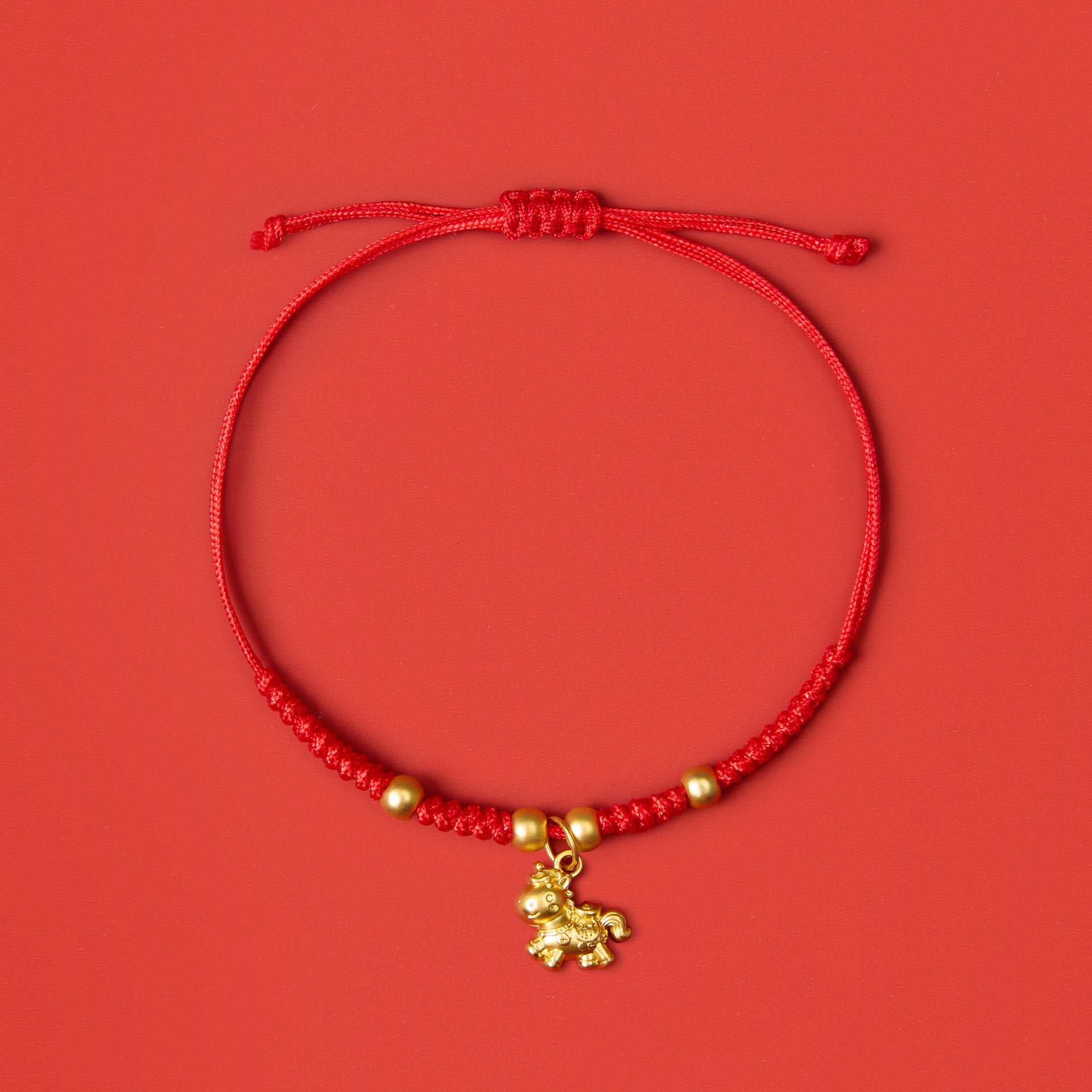
The Protective Blessings collection offers physical symbols such as red-string bracelets, Pixiu pieces, and guardian designs. A red string can remind you to move carefully and speak with respect. A guardian symbol can represent the wish to protect family, home, and community.
For readers who prefer a no-flame option, the Attract Wealth Prosperity and Protection Talisman HD Wallpaper for Phone turns a phone screen into a daily visual cue. Its symbolism is connected with prosperity and protection in the product tradition, while the digital format creates no burning residue or physical item to store.
Tai Sui is a separate, year-based Chinese astrology tradition. If you are studying that topic, browse the Tai Sui Protection collection as optional further reading. Tai Sui is not a Ghost Month requirement, and one annual protection symbol should not be presented as a universal cure for seasonal fear.
When you choose an object, give it a small ritual. Clean the place where it will sit. Name the quality you want to practice. Then connect the symbol to an action such as checking a flame, calling an elder, donating food, or leaving a shared space clean. This is how a talisman becomes meaningful without pretending to do the work for you.
A Calm Home Practice for Beginners
If you are new to Ghost Month and do not have a family altar, keep the practice simple:
- Place a cup of tea, a piece of fruit, or flowers on a clean table.
- Say the names of people you remember, or speak a general blessing for ancestors and those without family offerings.
- Sit quietly for five minutes without trying to force a supernatural experience.
- Share or properly dispose of the offering afterward.
- Write one action of generosity you will complete before the month ends.
You may use a small red string bracelet, a guardian image, or a digital wallpaper as a visual anchor. The meaning comes from attention and conduct. The object simply helps you return to them.

Frequently Asked Questions
When is Ghost Month in 2026?
Ghost Month 2026 runs from August 13 through September 10, based on the traditional Chinese lunar calendar. The Hungry Ghost Festival is commonly observed on August 27, the fifteenth day of the seventh lunar month.
What is the Hungry Ghost Festival?
The Hungry Ghost Festival is a central observance on the fifteenth day of the seventh lunar month. Families and communities may make offerings, pray, honor ancestors, feed spirits without regular offerings, attend temple events, or gather for cultural performances.
What should you do during Ghost Month?
Learn your local or family tradition, make a modest offering if appropriate, follow temple and fire-safety guidance, keep public spaces clean, and practice generosity. You do not need to follow every custom or fear ordinary daily activities.
Is it safe to burn joss paper at home?
Only burn joss paper where local law, building rules, and fire conditions allow it. Use a stable approved container, keep the area clear, supervise the fire, and confirm that all embers are fully extinguished before leaving.
Can I observe Ghost Month without burning incense or paper?
Yes. You can honor the month with food, flowers, prayer, a temple donation, ancestor remembrance, a shared meal, or a reusable or digital symbol. Lower-waste and no-flame practices are respectful choices when they fit your family and community tradition.
Final Thoughts
Ghost Month is not a season that asks you to live in fear. It asks you to remember that generosity, grief, family, community, and responsibility are connected.
In 2026, the seventh lunar month ends on September 10. Wherever you are reading this, the lasting practice is the same: offer only what you can offer with care, follow local safety rules, leave less waste behind, and speak about another culture with enough humility to keep learning.
If a KarmaBless bracelet, guardian symbol, or digital wallpaper helps you hold that intention close, choose one that fits your life and use it with purpose. Let the object remind you to make the safer choice, the kinder gesture, and the cleaner close.
Sources and Further Reading
- Hong Kong Observatory 2026 Gregorian-Lunar Calendar
- Singapore Civil Defence Force: Fire Safety Tips for the Religious Observance of the Festival of the Hungry Ghost, an archived public advisory
- Singapore National Heritage Board: Zhong Yuan Jie, Hungry Ghost Festival
- KarmaBless Protective Blessings
- KarmaBless Protection Wallpapers
- KarmaBless Tai Sui Protection