
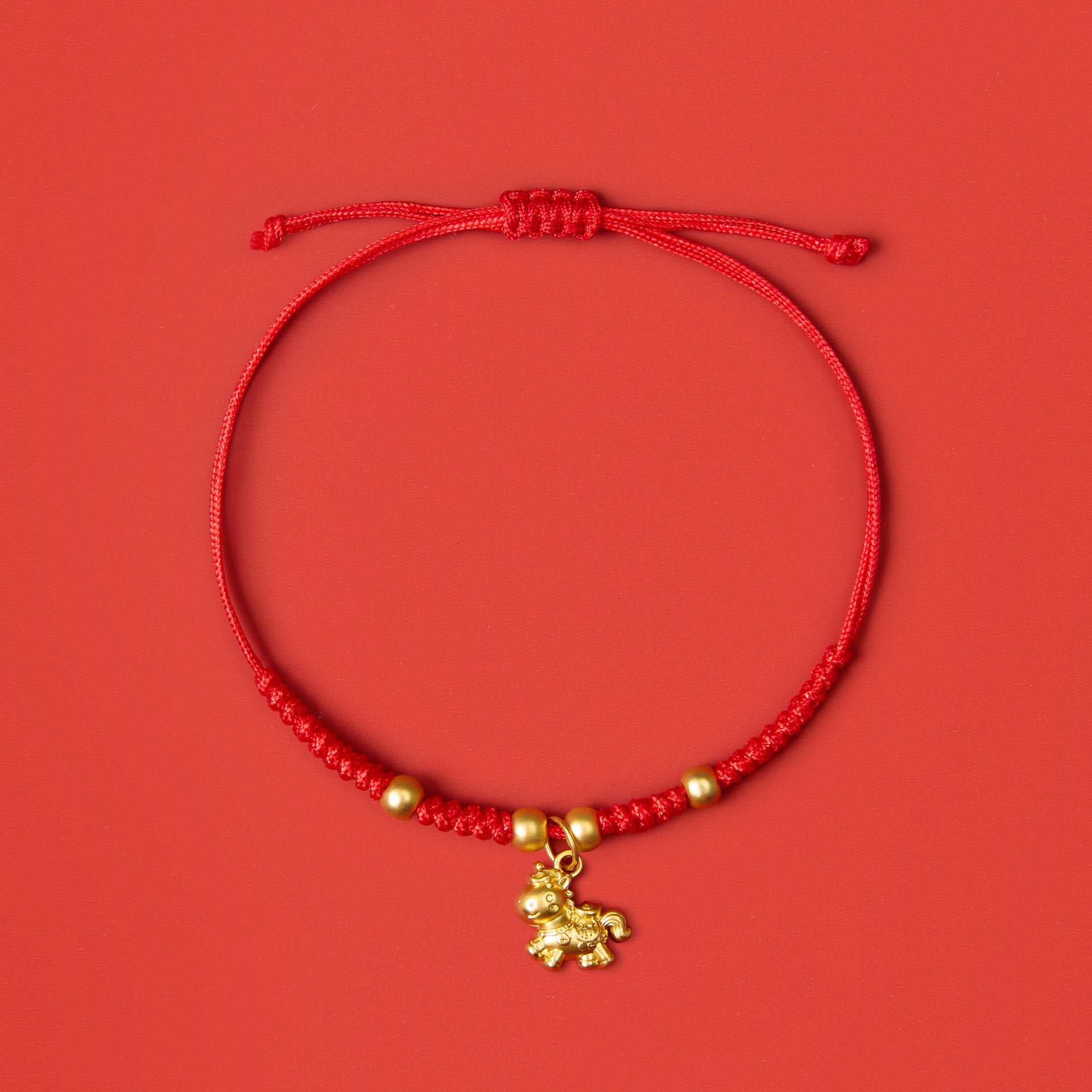

Red String Bracelet Meaning: How to Wear, Tie, Choose, and Gift a Red String Bracelet

On this page
A red string bracelet can look almost too simple to “mean” anything at all—just a thin thread, a small knot, maybe a charm.
But that simplicity is exactly why it lasts. Across cultures, a red thread is easy to tie, easy to share, and hard to ignore once it’s on your wrist. For some people it’s a spiritual symbol. For others it’s a protective custom. For plenty of modern wearers, it’s a quiet way to hold onto an intention: stay steady, stay kind, stay open to luck.
This guide breaks down the most common red string bracelet meaning interpretations, explains how to wear and tie one comfortably, and gives you a practical buying and gifting framework—without turning a living tradition into a one-size-fits-all “magic charm.”
What Does a Red String Bracelet Mean?
The most widely shared red string bracelet meaning is surprisingly consistent: protection, good luck, blessings, connection, and intention.
Where it gets confusing is why those themes show up—because a red string bracelet isn’t one single religious object with one official definition.
Depending on the tradition (and the person), the red string bracelet spiritual significance may be understood as:
-
Protection from harm, misfortune, or negativity
-
Good luck and “opening roads” to opportunity
-
Blessing during a life transition (a move, a new job, a fresh start)
-
Connection to a lineage, teacher, community, or loved one
-
A reminder to live by a value (patience, courage, compassion)
-
An intention anchor—a way to bring your attention back to what you’re choosing
Kabbalah and Jewish folk custom
In popular modern explanations, a red string bracelet is often linked to Kabbalah and Jewish folk practice, commonly framed as a protective custom associated with guarding against the “evil eye.”
A helpful nuance is that many sources describe the red string as a folk practice rather than a formal religious requirement. For a neutral overview, see Wikipedia’s overview of the red string in Kabbalah, which also notes how the custom spread more widely in the late 1990s.
The evil eye, and why it shows up so often
The “evil eye” idea shows up across many cultures: it’s commonly described as the belief that an envious or malevolent gaze can cause harm or misfortune. A neutral definition (and how widespread the belief is) is summarized in Wikipedia’s definition of the evil eye belief.
In many communities, red—because it’s bold, vivid, and life-associated—became one of several colors used in protective symbolism. That doesn’t mean every red string bracelet is “about” the evil eye. It just explains why the association is common.
Hinduism: red threads as blessing and protection
In Hindu traditions, red threads and cords are often tied during rituals and ceremonies as a protective blessing. You may see terms like kalava, mauli, or raksha sutra (often translated as a “thread of protection”).
The key point for a beginner: the meaning can be tied to a specific ceremony, deity, or community practice—so it’s best not to flatten all red threads into the same story.
Buddhism: blessed cords and remembrance
In some Buddhist contexts, cords or strings can be blessed and tied as reminders—of compassion, mindfulness, refuge, vows, or protection in a broad spiritual sense.
Again, it’s not universal across every Buddhist tradition. Some lineages emphasize ritual blessing by a teacher; others may treat it more as a personal reminder.
Modern spiritual meaning: intention without dogma
Today, many people wear red string bracelets outside of any formal religion. In that modern spiritual context, the bracelet functions like a portable intention:
-
You set a goal (feel protected, stay grounded, choose courage)
-
You wear a symbol of that goal
-
When you see or feel it, you remember what you’re practicing
Key Takeaway: A red string bracelet is a symbol with many origins. The most respectful approach is to learn the tradition you’re referencing—and if you’re not referencing one, wear it as a personal intention rather than claiming a universal spiritual “rule.”
Which Wrist Should You Wear a Red String Bracelet On?
If you’re searching “Which hand do you wear a red string bracelet on?” you’ll see lots of confident answers.
The honest answer: there isn’t one global rule.
That said, there are common patterns.
The left wrist: “receiving” protection and blessing
In many Kabbalah-inspired explanations and modern spiritual-wear habits, the left wrist is the most common choice.
You’ll often hear it described as the “receiving” side—where you receive protection, blessings, and supportive energy. One example of this common framing appears in HoneyGood’s red string bracelet tradition Q&A.
If you’re wearing your bracelet primarily for protection and grounding, the left wrist is a simple, widely recognized default.
The right wrist: action, giving, and personal preference
Some people choose the right wrist when the bracelet represents what they want to do in the world—take action, show love, build discipline, make a change.
In some cultural contexts, right-wrist placement can also be a tradition-based norm (for example, tied to ritual conventions).
And sometimes the reason is purely practical: you want it on the wrist that won’t snag, irritate your skin, or interfere with your daily routine.
Who should tie the red string bracelet?
In many traditions, having someone you trust tie it for you is meaningful because it turns the moment into a blessing:
-
a friend who genuinely wants good things for you
-
a partner
-
a parent
-
a teacher
If you don’t have that person (or you’d rather keep it private), tying it yourself can still be sincere. The bracelet doesn’t become “fake” because you put it on alone.
Do you need to set an intention?
You don’t need to. But it helps—especially for beginners.
A simple intention is more powerful than a dramatic one:
-
“I move through today protected and calm.”
-
“I choose steadiness.”
-
“I let good opportunities find me.”
If you want a clear practice: take one slow breath, say your intention quietly, then tie.
Sizing and comfort (what most guides forget)
Whatever wrist you choose, the bracelet should be secure but not tight:
-
You should be able to slip a finger under the cord.
-
If your hand tingles or your skin dents, loosen it.
-
If you’re between sizes, an adjustable sliding knot is usually the easiest daily-wear option.
If you’re buying for someone else, adjustable designs remove a lot of stress.
How to Tie, Wear, and Care for a Red String Bracelet
This section is the practical heart of the guide: how to tie a red string bracelet, how to wear it comfortably, and what to do when it loosens, breaks, or gets wet.
How to tie a red string bracelet (simple method)
You don’t need an elaborate ritual to tie a red string bracelet well. You do need a comfortable fit and a secure knot.
-
Measure your wrist
-
Wrap the string around your chosen wrist.
-
Leave a little breathing room so the bracelet can move slightly.
-
-
Choose your knot approach
-
Single secure knot: simplest and cleanest.
-
Multiple knots: some people prefer a set number for symbolic reasons (for example, seven knots in some Kabbalah-inspired practices). Treat this as tradition, not a requirement.
-
-
Ask a close person to help (optional)
-
If someone you trust ties it, the moment often feels like a blessing rather than a task.
-
-
Tie, then test
-
Open and close your hand.
-
Rotate your wrist.
-
Make sure the knot doesn’t pinch.
-
-
Set (or renew) your intention
-
One sentence is enough.
-
If you’re using an adjustable bracelet with a sliding knot, the “tying” step becomes “adjusting”—you still want it snug enough to stay put, loose enough to breathe.
Red string bracelet rules and traditions (what’s common, what’s optional)
You’ll see rules like “never take it off” or “don’t let anyone touch it.” Those rules belong to specific traditions—or to specific modern interpretations.
A grounded way to think about it:
-
Traditions give structure and meaning to the practice.
-
Daily life requires comfort, hygiene, and common sense.
If you’re following a particular religious or cultural practice, honor that practice. If you’re not, it’s okay to treat the bracelet as a personal reminder rather than a strict rulebook.
Can you remove a red string bracelet?
Yes—you can remove it.
Some people prefer to keep it on until it naturally loosens or falls away, as a symbolic “completion.” Others remove it for practical reasons (sports, work, showers), then put it back on.
If you remove it, try not to turn that into anxiety. The meaning isn’t ruined. You’re simply taking care of the object.
Can you shower or swim with a red string bracelet?
It depends on the cord material and how it’s finished.
-
Many cords (especially softer fibers) will fade, fray, or stretch faster with frequent water exposure.
-
Chlorine and salt water are especially rough on knots and dyes.
If you want a simple default: remove it for swimming and long showers, especially if you want it to look good for longer.
Should you sleep or work out wearing it?
-
Sleeping: If it doesn’t irritate your skin, it’s usually fine. If you toss and turn, the cord may wear faster.
-
Workouts: Sweat and friction can weaken cords and loosen knots. If your bracelet includes metal charms, gyms can scratch them.
If you’re doing heavy training, take it off and put it somewhere meaningful—on a nightstand, on a small tray, or around a safe hook.
What does it mean when a red string bracelet breaks?
You’ll hear two common interpretations:
-
Traditional / spiritual interpretation: the bracelet “did its job” (absorbed negativity, completed a cycle, protected you through a hard season).
-
Practical interpretation: cords break. Knots loosen. Life happens.
Both can be true in a gentle way. If it breaks, you don’t have to treat it as a bad omen.
If you want a simple ritual that stays respectful (and not superstitious): thank it for what it reminded you of, then replace it when you’re ready.
If your knot loosens: what to do
-
Retie it sooner rather than later. A half-loosened knot frays faster.
-
If the cord is very worn, replace it.
-
If it’s adjustable, clean the slider area and gently re-tighten.
Red String Bracelet Styles, Materials, and Buying Guide
If you want to know where to buy a red string bracelet, start with two questions:
-
Do I care about a specific tradition, or am I wearing this as a modern intention symbol?
-
Do I want it to survive daily life—water, sweat, friction—or will I wear it occasionally?
Those answers shape everything: cord material, thickness, knot style, and whether you choose beads or charms.
Cord materials: wool vs cotton vs nylon vs silk vs polyester
Here’s a practical comparison (general guidance—specific quality varies by maker):
-
Wool
-
Feel: soft and natural
-
Tradeoff: can absorb water and wear faster
-
Best for: tradition-forward wear, gentle daily use
-
-
Cotton
-
Feel: comfortable, breathable
-
Tradeoff: may fade or stretch with frequent water exposure
-
Best for: minimal everyday bracelets, sensitive skin
-
-
Nylon
-
Feel: smooth, slightly “technical”
-
Upside: strong, more water-resistant than natural fibers
-
Best for: you want durability and fewer breakages
-
-
Silk (or silk-like thread)
-
Feel: sleek, elegant
-
Tradeoff: depends on weave; can snag if very fine
-
Best for: dressier, lightweight bracelets
-
-
Polyester cord
-
Feel: varies
-
Upside: durable and colorfast in many cases
-
Best for: budget-friendly everyday wear
-
If you have sensitive skin, look for a soft cord and avoid rough metal edges on charms.
Thickness, knots, and adjustability
Small design choices make a big difference in daily wear:
-
Cord thickness
-
Thinner: subtle, minimalist, easier to layer
-
Thicker: more durable, more visual “presence”
-
-
Adjustable sliding knot
-
Best for gifting (less sizing guesswork)
-
Helpful if you prefer different tightness on different days
-
-
Fixed knot
-
Looks clean and traditional
-
Requires more precise sizing
-
For example, KarmaBless includes adjustable sizing on several designs—like the Cinnabar Clover Luck Amplifier Red String Bracelet and the Luck & Wealth Red String Pixiu Bracelet—which is practical if you’re not sure about fit.
Beads, charms, and metal accents (what they change)
A plain red string bracelet is often about simplicity. Adding a charm shifts the experience:
-
Minimalist red string: subtle intention, easy daily wear
-
Evil eye red string: adds a specific protective symbol (especially against envy)
-
Hamsa charm: often associated with protection in several cultures
-
Gemstone version: adds a second layer of meaning (grounding, clarity, calm)
-
Couple/friendship bracelets: emphasizes connection and shared intention
-
Luxury jewelry version: turns the symbol into a permanent “signature” piece
If you choose a charm, let it be specific. Instead of “I want everything,” decide what you want it to remind you of.
A good example of symbolic specificity is the Pixiu motif in Feng Shui traditions—often connected with wealth retention—like the Luck & Wealth Red String Pixiu Bracelet.

Adult vs child sizing
Even if a bracelet is “one size fits most,” it’s worth checking:
-
minimum and maximum adjustable length
-
whether the sliding knot can tighten enough for a smaller wrist
-
whether beads or metal accents could feel heavy on a child’s wrist
Buying checklist (quick, honest)
Use this checklist before you buy:
-
Comfort: Does the cord feel soft on skin?
-
Adjustability: Can it tighten/loosen easily?
-
Strength: Are knots neat and secure? Does the cord look tightly woven?
-
Water reality: Will you shower/swim with it? If yes, prioritize durability.
-
Sizing clarity: Does the seller list wrist range in inches/cm?
-
Craft quality: Are metal edges smooth? Does it snag fabric?
-
Cultural respect: Does the seller explain symbolism without flattening traditions?
-
Price vs build: Simple cords can be affordable; charms/materials raise price—make sure the finish matches.
If you want a curated starting point, browsing a focused collection can help you compare styles quickly—KarmaBless has a dedicated red string bracelets collection you can use to compare styles side by side.
Red String Bracelet for Protection, Luck, Love, and Gifting
A red string bracelet is often purchased for yourself—but it’s equally common as a gift.
The gift meaning is usually simple: “I want good things for you.”
Red string bracelet for protection and good luck
If your intention is protection and good luck, keep the bracelet straightforward:
-
choose a comfortable cord you’ll actually wear
-
keep it on the wrist that feels meaningful to you (often left for “receiving”)
-
treat it as a reminder to stay grounded and make good choices, not as a guarantee
Red string bracelet and evil eye meaning
An evil eye red string bracelet blends two layers:
-
red as a protective color symbol in many folk traditions
-
the evil eye symbol as a sign meant to reflect envy or ill will back away from you
The key is to use this symbol with respect: in many communities it’s not a trend—it’s part of everyday cultural life.
Red string bracelet for couples or friendship
As a couple or friendship bracelet, the red string often represents:
-
connection
-
loyalty
-
shared intention
-
“I’m with you, even when we’re not in the same room.”
You can keep it minimal, or choose a symbol with a shared meaning (peace, protection, courage).
A calm gifting option that leans into harmony is a peace-knot design—like the Lucky Scarlet Peace Knot Red String Bracelet.
Red string bracelet gift meaning (what to say when you give it)
If you’re gifting one, a sentence is enough:
-
“For protection as you travel.”
-
“For luck in your new role.”
-
“To remind you you’re not alone.”
-
“For calm when life gets loud.”
The bracelet doesn’t have to carry pressure. It’s a gesture.
Pro Tip: If you don’t know the person’s wrist size, choose an adjustable design. It makes the gift feel thoughtful instead of risky.
Next steps: choose a red string bracelet that fits your life
If you want your bracelet to feel right—not just look right—choose in this order:
-
Start with meaning: protection, luck, love, grounding, or a fresh start.
-
Choose your wearing tradition: left wrist for receiving/protection is a common default; right wrist is fine if it fits your belief or comfort.
-
Pick a material and fit: adjustable if you want ease, stronger cord if you want durability.
-
Decide on symbolism: plain red string, evil eye, hamsa, gemstones, or a charm that matches your intention.
-
Buy for real life: consider water exposure, workouts, and daily comfort.
If you’d like to browse styles with different intentions—from minimalist cords to charm-based designs—start with the KarmaBless red string bracelets collection (linked once in this guide above) and choose what feels both comfortable and respectful.
FAQ
Which hand do you wear a red string bracelet on?
Most commonly, people wear it on the left wrist, especially in Kabbalah-inspired explanations, because the left side is often described as the “receiving” side for protection and blessing. But there’s no universal rule—right wrist or either wrist can be appropriate depending on tradition and personal meaning.
If you want the plain-English answer to the keyword question which wrist to wear a red string bracelet on: left is the most common default, and right is a reasonable choice if it fits your tradition, comfort, or intention.
What does a red string bracelet mean spiritually?
Spiritually, a red string bracelet often represents protection, blessings, luck, and intention-setting. In many modern interpretations, it’s also a wearable reminder to stay grounded, compassionate, or focused on a goal—without guaranteeing any specific outcome.
How do you tie a red string bracelet?
Wrap it around your wrist with a little breathing room, then tie a secure knot (or adjust a sliding knot). Some traditions prefer multiple knots, but the most important thing is that it’s comfortable, secure, and connected to an intention you actually care about.
What does it mean when a red string bracelet breaks?
Some people interpret a break as the bracelet having completed its purpose (for example, symbolically “absorbing negativity”). Others see it as normal wear and tear. Either way, it doesn’t need to be treated as a bad omen—replace it if you want to continue the practice.
Can you remove a red string bracelet?
Yes. Some traditions prefer leaving it on continuously, but many people remove it for practical reasons (workouts, showers, swimming) and put it back on later.
Can you shower or swim with a red string bracelet?
It depends on the cord. Frequent water exposure—especially chlorine or salt—can fade dye and weaken knots. If you want it to last and look good, removing it for swimming and long showers is a safe default.
What is the difference between a plain red string bracelet and an evil eye red string bracelet?
A plain red string bracelet usually emphasizes simplicity and intention. An evil eye red string bracelet adds a specific protective symbol associated with guarding against envy or ill will in many cultures.
Where is the best place to buy a red string bracelet?
The best place is a seller that’s transparent about sizing, materials, and symbolism—so you can choose something comfortable, durable, and respectful of the tradition you’re drawing from. If you want a curated set of styles, you can browse the KarmaBless red string bracelets collection.